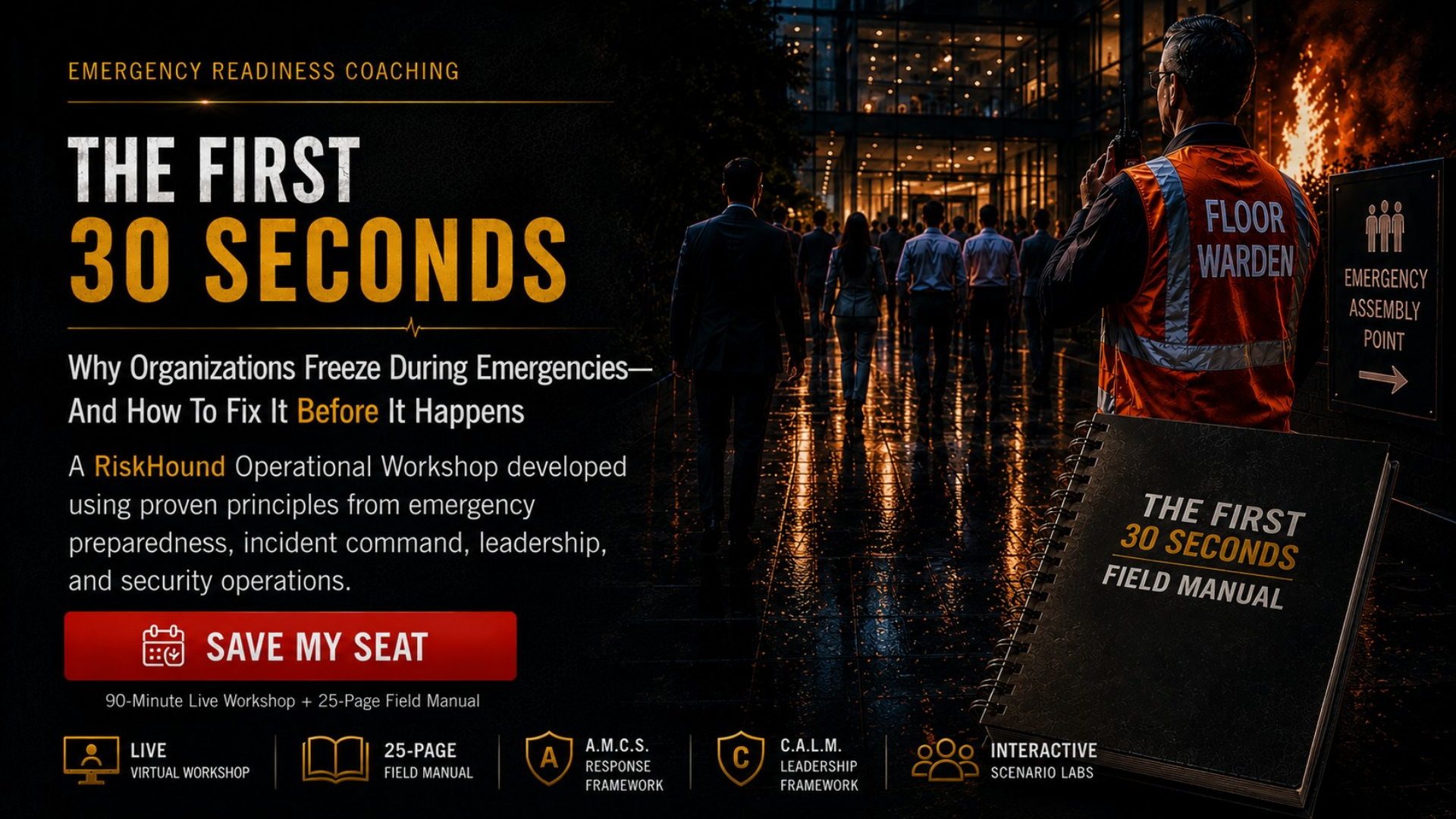
MOST ORGANIZATIONS HAVE A PLAN
THE PROBLEM IS THEY HAVE NEVER TESTED WHETHER PEOPLE CAN EXECUTE IT.
THE BINDER DOESN'T RESPOND. PEOPLE DO.
The organizations that perform best during emergencies are not necessarily the organizations with the most detailed plans. They are the organizations whose people know how to establish control, communicate clearly, and make decisions under pressure. That is exactly what this workshop was designed to teach.
SCENARIO LABS
Apply The Frameworks In Realistic Workplace Emergencies
Understanding a framework is one thing. Applying it under pressure is another. Throughout the workshop, participants will work through realistic workplace scenarios designed to challenge decision-making, communication, and leadership.
WHAT YOU'LL LEARN
In this workshop, you'll learn how to establish control, make decisions, communicate clearly, and guide others through the first moments of an incident. To accomplish that, you'll learn and apply two practical frameworks developed to help organizations and leaders perform under pressure.
FRAMEWORK 01
A.M.C.S.
The Organizational Response Framework
When uncertainty arrives, organizations must quickly answer four critical questions:
Authority
Who is in charge?
Movement
Where do people go?
Communication
What message gets delivered?
Stabilization
How does leadership regain operational control? A.M.C.S. provides a practical structure for establishing order before confusion spreads.
FRAMEWORK 02
C.A.L.M.
The Leadership Response Framework
At the same time the organization is responding, leaders are being tested. People are watching. Information is changing. Decisions cannot wait.
Composure
Control emotions and set the tone.
Assessment
Focus on facts, not assumptions.
Leadership
Make decisions and communicate with purpose.
Movement
Create action and maintain momentum. C.A.L.M. helps leaders maintain clarity when pressure is highest.
The real challenge is applying those concepts when information is incomplete, conditions are changing, and people are looking to you for direction. That's why every participant works through 2 realistic Scenario Labs designed to place them in the role of the decision-maker. You won't simply learn the frameworks. You'll apply them.
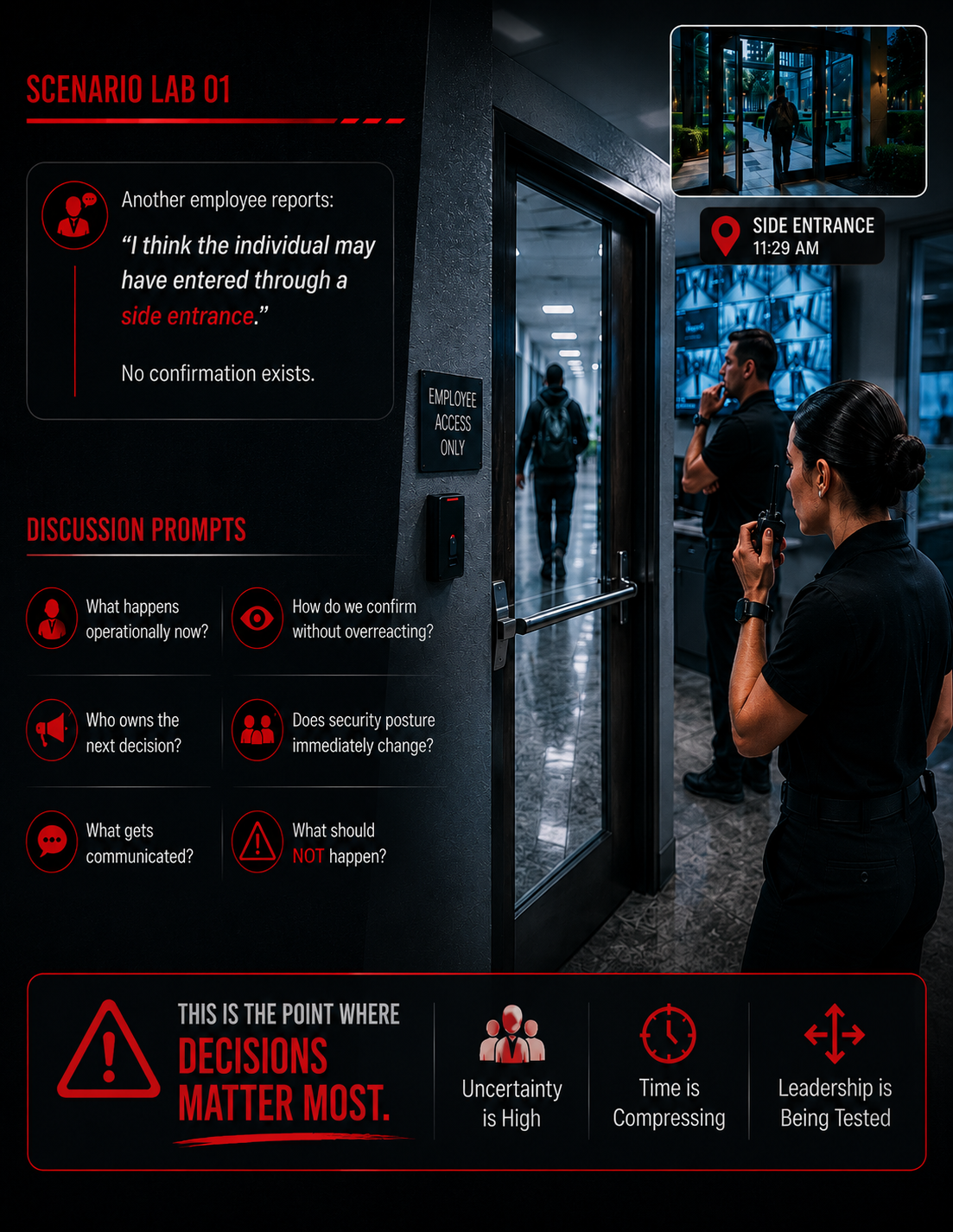
A radio call comes in. An employee reports a suspicious individual on property. The description is vague. Rumors begin spreading. Different people are reporting different things. No one knows exactly what's happening. Yet everyone wants to know what you're going to do about it.
As information continues to arrive, you'll be forced to determine what matters, what doesn't, and what actions should be taken before certainty exists.
THE QUESTION ISN'T:
"What's the policy?"
THE QUESTION IS:
"What do you do right now?"
SCENARIO LAB 01
REPORTS OF A SUSPICIOUS PERSON
SCENARIO LAB 02
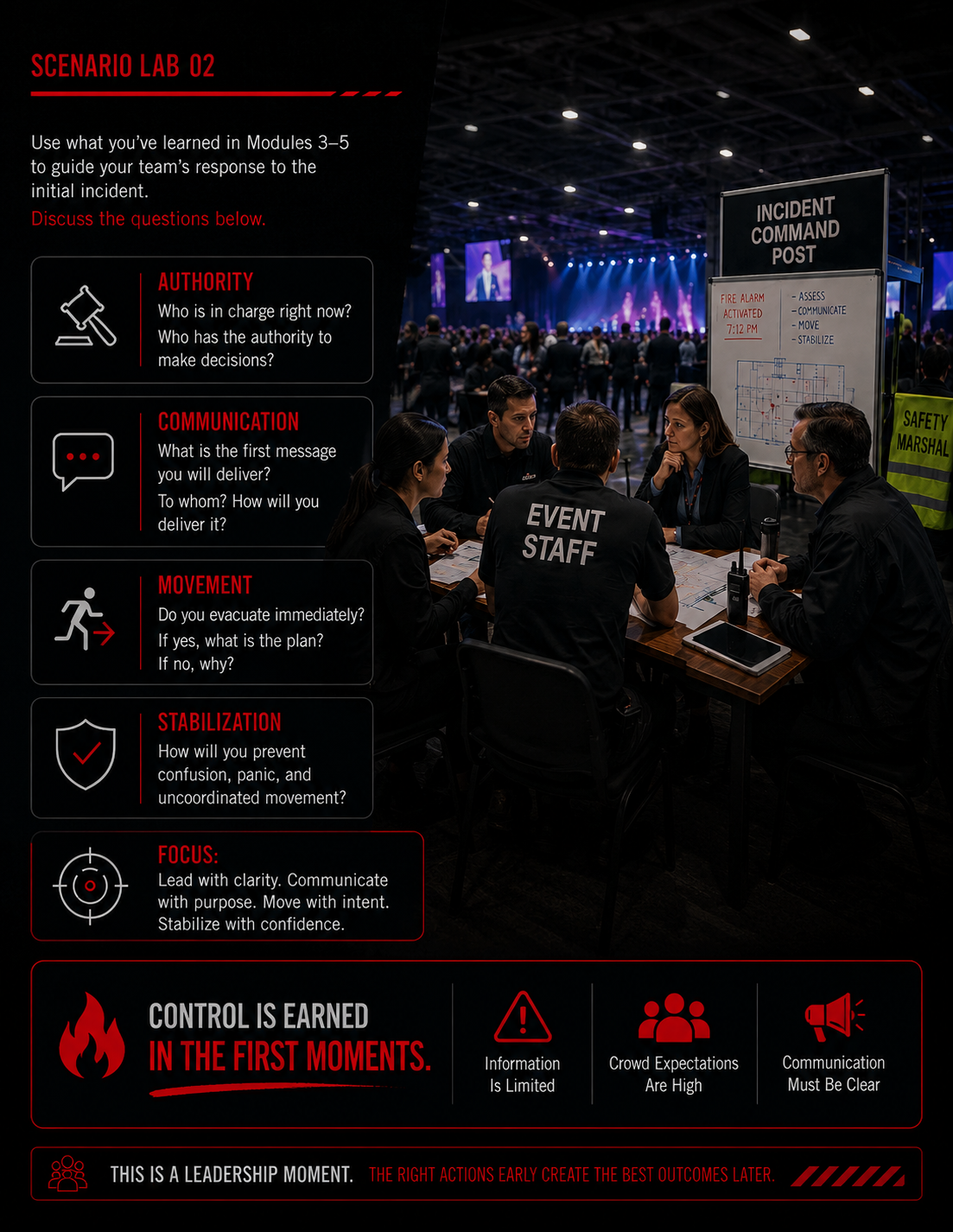
FIRE ALARM DURING A MAJOR EVENT
The fire alarm activates. Hundreds of guests are attending a major event. The cause is unknown. Guests begin looking around. Employees begin asking questions. Some people start moving toward exits. Others continue with the event. Within seconds, everyone is looking for direction. And you're the one expected to provide it. No one knows whether the alarm is real, accidental, or something more serious. You don't have perfect information.
Will you evacuate?
What will you communicate?
Who owns the next decision?
How do you maintain control while information is still developing? For this scenario, you'll step into the role of the leader responsible for guiding people through uncertainty while pressure builds with every passing minute.
INCLUDED WITH EVERY REGISTRATION
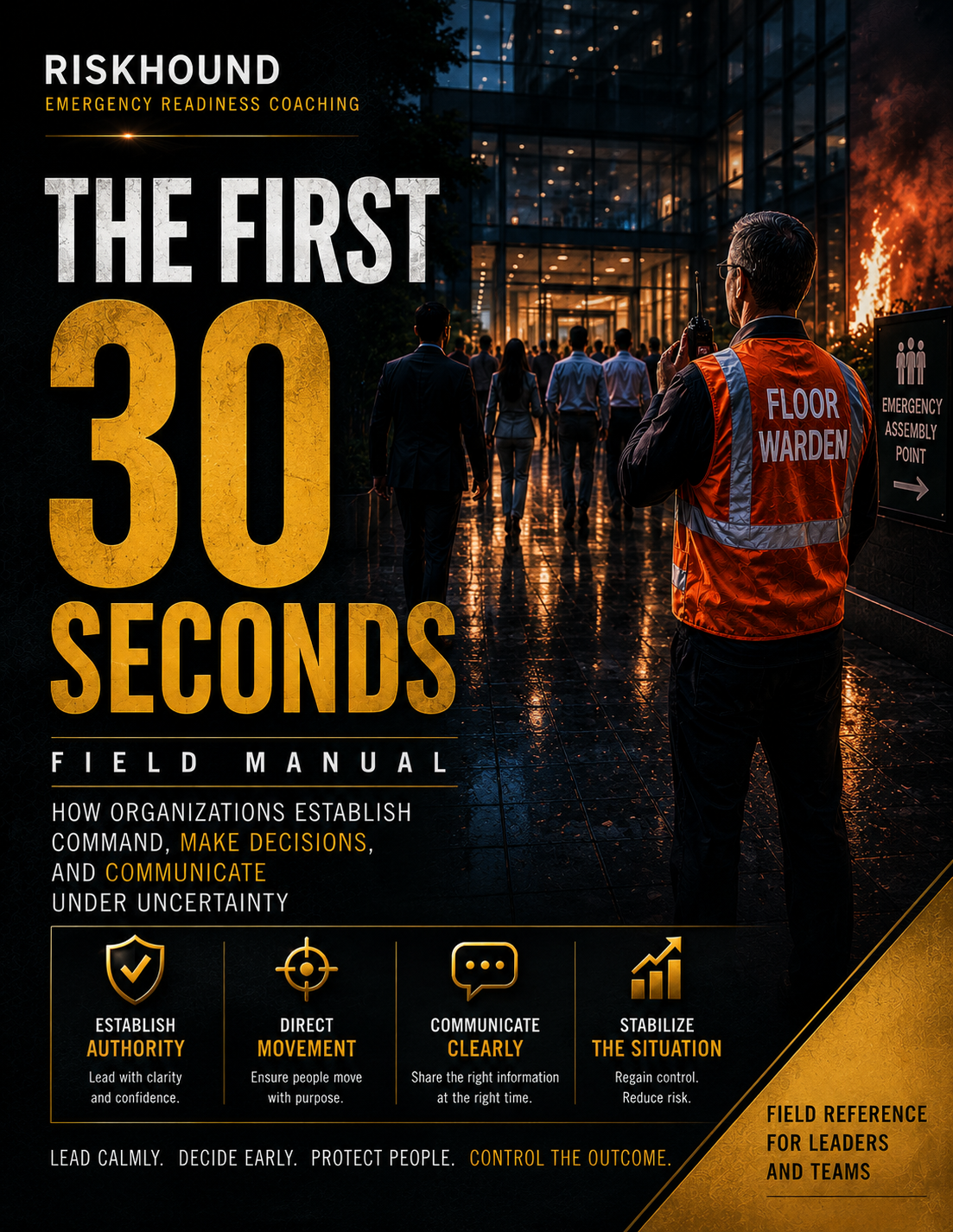
THE FIRST 30 SECONDS FIELD MANUAL
Every participant receives a professionally designed 25-page field manual built to reinforce the concepts taught throughout the workshop. This isn't a workbook. It's a practical operational resource designed to help leaders, managers, supervisors, and response teams improve decision-making during emergencies.
Inside the manual, you'll find:
Leadership Under Stress
Practical insights into tunnel vision, cognitive overload, conflicting priorities, and the challenges leaders face during rapidly evolving situations.
Scenario-Based Learning
Visual references and decision-making concepts tied directly to the workshop's interactive scenario labs.
Quick Reference Tools
Action-oriented framework summaries designed for review long after the workshop has ended.
The First 30 Seconds Operational Workshop was created to help bridge the gap between planning and performance. Its purpose is simple: To provide leaders with practical concepts, visual tools, and decision-making frameworks they can use when uncertainty arrives and people are looking for direction.
BUILT FOR ACTION.
"For 90 minutes, you'll experience what it feels like to establish control, communicate clearly, and lead others through the first moments of an incident."